



Blog
All-Clay Practice Darbuka: A Quieter Way to Practise at Home

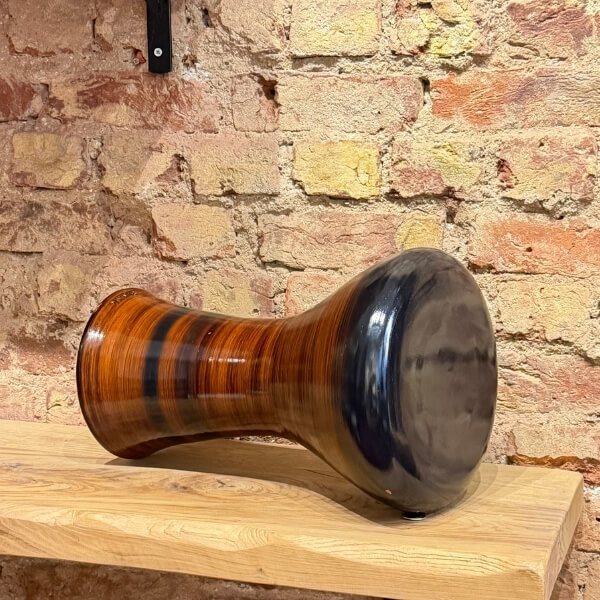
The Sonika All-Clay Practice Darbuka is designed for players who want a quieter way to practise at home. With a handmade clay body and a ceramic playing surface instead of a skin head, it offers a softer sound and a distinctive playing feel.
Whether you are warming up, repeating a finger exercise or working on a new rhythm, this low-volume darbuka gives you another way to keep practising.
What makes an all-clay darbuka different?
A regular darbuka produces sound through a stretched natural or synthetic head. An all-clay darbuka has a ceramic playing surface, so your hands strike clay directly.
This creates a more muted sound with its own earthy character. It does not reproduce the full bass and ringing edge tones of a skin-headed darbuka. Instead, it offers a different response for focused practice and musical exploration.
A quieter option for darbuka practice at home
Repeating exercises on a full-volume instrument is not always practical in a shared home. The All-Clay Practice Darbuka offers a softer alternative for working on timing, coordination and control.
You can use it for alternating-hand exercises, finger patterns, steady rhythmic phrases and warm-ups before a rehearsal or performance. Start slowly, keep your hands relaxed and listen for an even sound between your strokes.
Is the All-Clay Practice Darbuka completely silent?
No. Although sometimes described as a silent practice darbuka, it still produces an audible sound. How much others hear depends on your playing intensity, the room and the surrounding surfaces.
It is designed for quieter practice, but it cannot guarantee that no sound will reach another room or apartment. A sound demonstration will help you understand its character, although recording settings and playback volume affect how loud it seems.
Does it replace a regular darbuka?
The ceramic surface responds differently from a stretched skin. It can support coordination and rhythm exercises, but practising on your regular darbuka remains important for developing its specific tones, touch and dynamics.
The all-clay model can also be explored as a percussion instrument in its own right. Its compact, earthy sound offers another texture for creative playing.
Choosing and caring for your practice darbuka
Check the measurements on the individual product page before choosing your instrument. Handmade models can vary in size, and a comfortable playing position matters during longer sessions.
Protect the ceramic body and playing surface from impacts. Use a suitable case for transport and place the instrument on a stable surface between sessions.
Explore Sonika Percussion
Discover the All-Clay Practice Darbuka and listen to its sound: